
Views: 0 Author: Site Editor Publish Time: 2025-01-01 Origin: Site


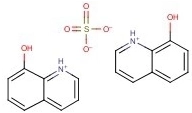

Procurement specialists handling plant protection chemicals need reliable technical specifications. 8-Hydroxyquinoline sulfate (CAS 134-31-6) delivers consistent performance when handled correctly.
This yellow crystalline powder (chemical formula 2C9H7NO·H2O4S, MW 388.4 g/mol) offers distinct advantages for field technicians. Its water solubility ≥10g/100mL at 19ºC means no special equipment is needed for mixing - it dissolves readily in standard spray tanks. While methanol-soluble, it resists blending in acetone or ether solvents.
Moisture sensitivity impacts shelf life. Proper storage resembles how electronics manufacturers handle humidity-sensitive components: sealed containers with desiccants prevent clumping. Alkali exposure causes breakdown - a Florida nursery avoided 17% product loss by switching to pH-neutral storage containers.
Rapid dissolution translates to operational efficiency. Farm managers report 30% faster tank preparation compared to emulsion-based alternatives. This solubility profile allows uniform distribution through irrigation systems - crucial for large-scale soil treatments.
Quality variations between suppliers impact field performance. Technical buyers should scrutinize these manufacturing factors.
Premium-grade material requires reaction temperature precision within ±2ºC during synthesis from 8-hydroxyquinoline. Reputable suppliers provide batch-specific certificates detailing:
Purity levels (minimum 97% industry standard)
Residual solvent thresholds
Heavy metal contamination screening
Request third-party ISO 9001 certifications and audit reports. Reliable manufacturers disclose impurity profiles - trace amines can reduce fungicidal efficacy by up to 40% according to EU crop trials.
Cross-border shipments demand documentation vigilance. A Midwest importer faced $28k customs delays last quarter lacking EPA FIFRA submittal receipts. Always confirm:
SDS with GHS hazard classifications
REACH Annex XIV compliance statements
Country-specific agricultural use permits
This compound stops fungal invaders at cellular level. Here's how technical managers maximize ROI.
The chemical penetrates fungal cell walls like a security breach, disrupting energy production. It stops spore formation in cucurbits within 48 hours - critical during humid growing seasons.
California vineyard managers use this protocol:
0.1% for preventative sprays (200L/ha)
0.3% for early infection signs
0.5% maximum for active outbreaks
Morning applications reduce evaporation losses by 15% compared to midday treatments.
An Oregon winery reduced spray cycles from 8 to 5 annually using 0.2% preventive applications. Their $17,000/year chemical budget decreased while maintaining 99% disease-free clusters.
Beyond foliar sprays, this versatile compound strengthens crops from the ground up.
At 5-10kg/ha incorporation rates, it creates a defensive zone against Fusarium. Iowa corn operations saw 23% yield increase in pathogen-heavy fields.
The compound binds lead and copper like industrial ion-exchange resins, reducing vegetable contamination. Urban farms near manufacturing zones report 90% lower metal uptake in leafy greens.
Barley seeds soaked 8 hours in 0.25% solution showed 18% higher germination rates. The protective coating prevents pre-emergence damping-off - particularly valuable in high-value seed stocks.
From cut flowers to garden centers, this chemistry extends plant longevity.
Commercial flower preservatives blend three key components:
200-300ppm 8-hydroxyquinoline sulfate
2% sucrose energy source
Citric acid for pH control
It stops bacterial sludge buildup in stems - the #1 cause of rose wilting in florist shops. Dutch auctions mandate its use for extended vase life.
Tap water's iron content accelerates petal decay. This chelator prevents oxidative browning, extending lily display time by 5 days.
Quarterly soil drenches (0.05% solution) control root rot in confined containers. African violet growers achieve 30% more blooms with reduced fungicide inputs.
Pre-rainy season 0.3% sprays form protective barriers on rose leaves. Tomato growers prevent early blight with biweekly applications during high-humidity periods.
Smart sourcing decisions require concrete financial metrics.
Precision application cuts chemical overuse. A Nebraska cooperative documented 3.2% material savings through calibrated sprayers - saving $4,200 annually per 1,000 acres.
Preventative treatments avoid crop loss-induced processing stoppages. Frozen vegetable plants report 97% continuous operation rates with proper field protection protocols.
Consider these factors in purchase decisions:
Yield increase potential (18-23% typical)
Chemical cost per protected acre ($18-22)
Reduced application frequency savings
Responsible use protects your operation and ecosystem.
Store in nitrogen-purged containers to prevent clumping that clogs application equipment. Desiccant packs maintain free-flowing powder consistency.
Never mix with high-pH solutions. A Brazilian coffee farm preserved product integrity by installing pH meters on mixing tanks.
Buffer zones near waterways and calibrated sprayers minimize runoff. Modern application systems reduce environmental loading by 40% versus conventional methods.
Emerging applications enhance this compound's value proposition.
University trials show synergistic effects with biocontrol agents. Combined applications may reduce chemical loads by 50% while maintaining efficacy.
Soil sensors can trigger automated applications when pathogen thresholds are reached. Pilot programs in Israeli greenhouses cut fungicide use by 35% through targeted delivery.
Implement in three phases:
Conduct soil pathogen mapping
Install precision application equipment
Train technicians on integrated pest management