
Views: 0 Author: Site Editor Publish Time: 2025-02-19 Origin: Site


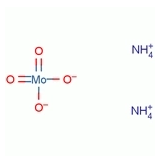

Picture this: Your catalyst production line suddenly shows inconsistent results. Batch yields fluctuate while unexpected by-products emerge. After weeks of troubleshooting, your team discovers the root cause - inconsistent ammonium molybdate purity. This exact scenario played out at a Texas refinery last quarter, where switching to 99%+ pure ammonium molybdate (CAS 13106-76-8) reduced catalyst replacement costs by $18,000 monthly. When impurities creep into your chemical processes, they don't just alter reactions - they erode profits through:
Unplanned equipment downtime during catalyst swaps
Increased waste from off-spec production batches
Quality control costs for additional testing
Technical specifications like "98% purity" transform from abstract numbers to critical profit drivers when you calculate actual production losses from subpar materials.
Commonly containing residual sulfates and trace metals, technical grade works best where minor impurities won't derail processes. Petrochemical engineers often deploy this grade for:
Corrosion-resistant coatings in structural steel treatment
Bulk filler in low-cost fertilizer blends
Precursor chemicals with high impurity tolerance
Consider this: A Brazilian pipe manufacturer saved 22% on raw material costs by switching to technical grade for anti-corrosion treatments - but only after confirming their process could handle 0.3% max iron content.
With heavy metals limited to ≤50ppm, reagent grade (molecular formula H4MoNO4-) delivers reliability for sensitive applications. This purity level prevents analytical drift in:
Precision phosphate testing in water treatment plants
R&D catalyst development for specialty chemicals
Quality validation of alloy compositions
One European QC lab reduced retesting rates by 47% after standardizing on reagent grade, leveraging its consistent 2.498 density for volumetric accuracy.
Containing ≤10ppm metallic impurities, this grade acts as the "ultra-pure foundation" for critical processes. The 170°C decomposition point becomes a strategic advantage in:
Semiconductor wafer production (vapor deposition phases)
Tier 1 automotive catalyst formulations
Medical imaging contrast agents
When a Korean electronics supplier upgraded to 99.99% grade, defect rates on molybdenum circuit layers dropped from 8.2% to 0.7% - directly boosting quarterly profits by $2.3M.
Here's what refinery operators won't tell you: Every 1% purity drop in ammonium molybdate can shorten hydrodesulfurization catalyst life by 15%. High-purity (99%+) material:
Prevents pore-blocking from impurity buildup
Maintains >98% sulfur removal after 12 months
Meets EPA Tier 3 standards without reactor modifications
Contrast this with an Indonesian refinery's experience: Using technical-grade material caused quarterly catalyst replacements instead of annual - adding $460,000/year in unplanned downtime.
Consider molybdenum-strengthened steel for aircraft landing gear: Just 0.01% impurity variation can reduce fatigue resistance by 30%. High-purity ammonium molybdate ensures:
Uniform dispersion in molten alloys
Consistent 1200MPa tensile strength batch-to-batch
Zero porosity in critical castings
Aerospace manufacturers pay premium prices for high-purity material because one failed turbine disc can trigger $20M+ in recall costs - dwarfing material savings.
Soybean farmers see this clearly: Fields fertilized with reagent-grade ammonium molybdate (95-98%) average 12% higher yields than those using technical grade. Why? Plants readily absorb the molybdate ions essential for:
Nitrogen fixation in legume root nodules
Enzyme activation for protein synthesis
Chlorophyll preservation during drought stress
But beware - a Mexican agribusiness learned that technical-grade contaminants caused leaf chlorosis across 500 hectares, requiring $190,000 in remediation sprays.
Ask your technical team: "What's the cost impact if this batch fails?" For non-critical surface treatments, technical grade may suffice. For catalysts or electronics, only high-purity makes financial sense when calculating total ownership costs.
Don't just glance at "% purity" - scrutinize impurity limits. Insist on:
Heavy metals (Pb/Cd/As) below 20ppm for EU REACH compliance
Chloride content ≤0.005% to prevent equipment corrosion
Lot-specific testing for critical applications
Run this equation:
Real Cost = [Material Price] + [Yield Loss % × Product Value] + [Downtime Costs]
Example: High-purity catalyst costs 15% more but delivers 23% longer service life - netting $380/ton savings.
Forward-thinking manufacturers leverage high-purity ammonium molybdate for breakthrough applications. We've seen:
Battery makers boost energy density 18% using ultra-pure molybdenum disulfide
Photovoltaic manufacturers cutting production waste by 31%
Biotech firms developing new contrast agents meeting FDA ICH Q3D standards
Choosing ammonium molybdate isn't about buying chemicals - it's about purchasing predictable outcomes. Technical grade serves cost-sensitive bulk applications, while reagent and high-purity grades protect high-value production. Remember:
Always cross-check supplier CoAs against application limits
Calculate total cost impacts - not just per-kg prices
Partner with suppliers who audit their impurity profiles
Your specification sheet is your first line of defense against hidden production costs. Demand the purity your process deserves.