Views: 0 Author: Site Editor Publish Time: 2025-11-10 Origin: Site


Water is essential, but many natural sources are contaminated with harmful substances. How can we ensure its safety? Water treatment chemicals play a crucial role in purifying water for consumption and industrial use.
In this article, we will explore the types of chemicals used in water treatment, their purposes, and why they are vital for both industries and everyday life.
Coagulants like aluminum sulfate (alum) and ferric chloride are essential in the coagulation process. These chemicals destabilize suspended particles in water by neutralizing their charges, causing them to clump together into larger aggregates known as flocs. This process is vital for removing suspended solids and clarifying water.
Flocculants are typically long-chain polymers used after coagulants. They bind the coagulated particles into larger, heavier flocs, which can then be easily removed by sedimentation or filtration. Flocculants are widely used in both municipal water treatment and industrial wastewater treatment to improve water clarity and efficiency.
Chlorine is the most common disinfectant used in water treatment. It effectively kills bacteria, viruses, and other pathogens, ensuring that the water is safe for human consumption. Chloramine, a combination of chlorine and ammonia, is also used in some municipal water systems, providing longer-lasting disinfection as water travels through pipes.
Other disinfectants include ozone and ultraviolet (UV) light. Ozone is a powerful oxidizing agent that disinfects without leaving harmful residues, making it a preferable option in some water treatment plants. UV light, though more costly, is another method of disinfecting water without chemicals, ideal for specific applications where chemical use is minimized.
Chemical Type | Common Chemicals | Primary Purpose |
Coagulants | Alum (aluminum sulfate), Ferric chloride | To remove suspended particles from water by neutralizing charges. |
Disinfectants | Chlorine, Chloramine, Ozone | To kill bacteria, viruses, and pathogens in water. |
pH Adjusters | Sulfuric acid, Sodium hydroxide | To adjust the pH level of water, ensuring optimal treatment conditions. |
Corrosion Inhibitors | Phosphates, Silicates | To prevent corrosion in pipes and treatment systems. |
Specialty Chemicals | Fluoridation agents | To prevent tooth decay and improve water quality. |
Maintaining the correct pH in water is crucial for effective treatment. Acids like sulfuric acid and bases like sodium hydroxide are used to adjust the water’s pH level. For example, sulfuric acid can lower the pH of alkaline water, while sodium hydroxide is used to neutralize acidic water, ensuring it is suitable for consumption and industrial use.
Alkalinity modifiers help stabilize the pH in water systems, preventing corrosion in pipes and equipment. These chemicals, such as sodium bicarbonate, are added to adjust the buffering capacity of water, ensuring it remains within the ideal pH range for safe use and system longevity.
Phosphates and silicates are corrosion inhibitors that form protective layers on metal surfaces, reducing the risk of corrosion. In water treatment systems, these chemicals are vital for maintaining the integrity of pipes and other infrastructure. By preventing rust and corrosion, they ensure that water treatment systems run efficiently and have a longer lifespan.
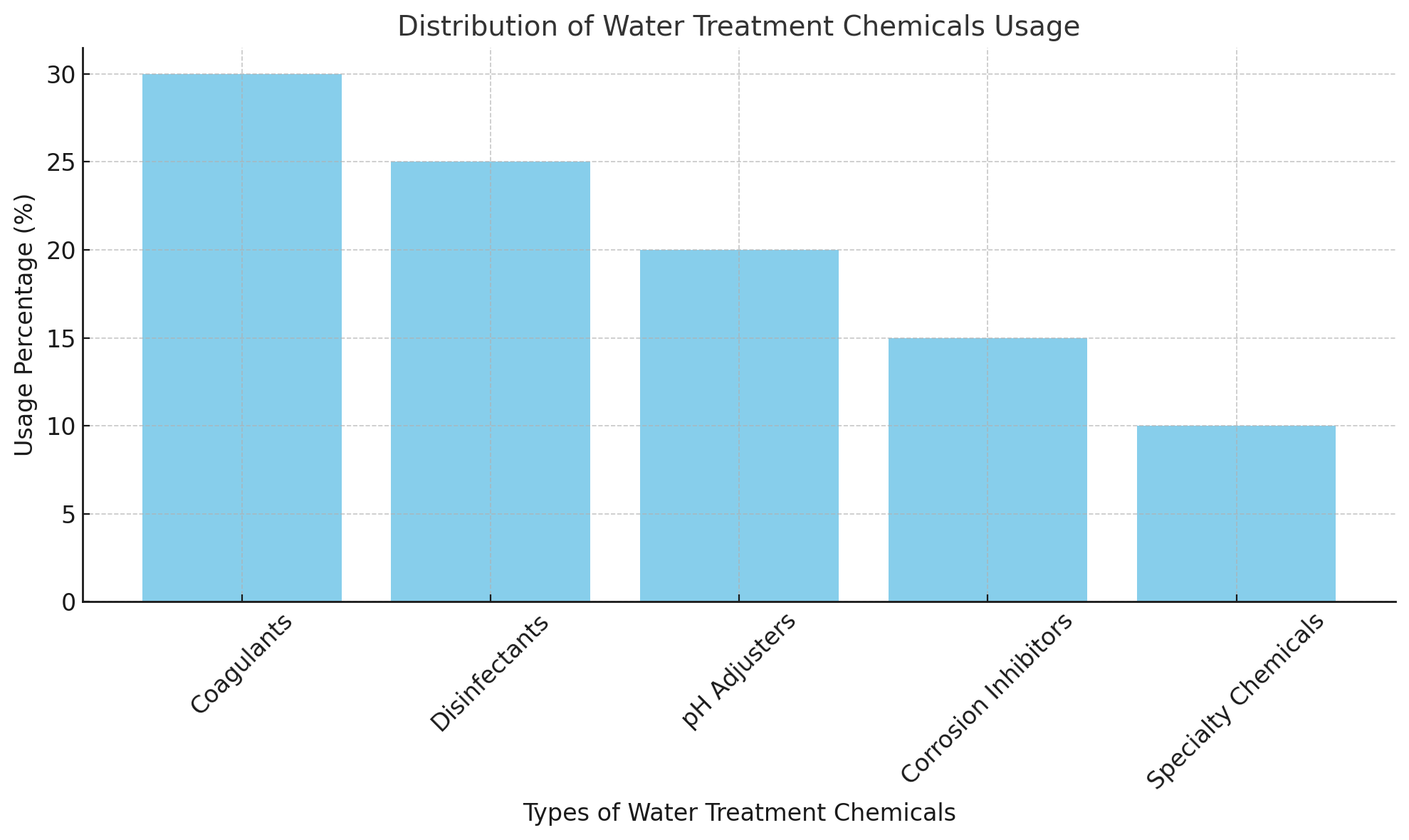
The coagulation process involves adding coagulants to water to neutralize the charge of suspended particles. This causes them to aggregate into larger clumps or flocs, making it easier to remove them from the water through subsequent treatment steps.
After coagulation, flocculants are added to help bind the coagulated particles into even larger flocs. The flocs then settle to the bottom during sedimentation or are removed by filtration. This process is crucial in ensuring that the water is free from impurities and clear.
Stage | Chemical Used | Purpose | Example Chemicals |
Coagulation | Coagulants | To neutralize the charges of particles in water. | Alum, Ferric chloride |
Flocculation | Flocculants | To bind particles into larger aggregates for easier removal. | Polyacrylamide, Cationic flocculants |
Sedimentation | - | To allow particles to settle due to gravity. | - |
After coagulation and flocculation, the water undergoes sedimentation, where the larger flocs settle at the bottom of the tank. The clear water on top is then filtered through various media such as sand, gravel, and charcoal to remove any remaining particles and microorganisms.
Disinfection is the final step to ensure that harmful pathogens are eliminated from the water. Disinfectants like chlorine, chloramine, or ozone are added at this stage to kill any remaining bacteria, viruses, and other harmful microorganisms, ensuring the water is safe for consumption and use.
Oxygen scavengers like sodium sulfite are used to prevent corrosion in industrial boilers and other water systems. By removing dissolved oxygen, these chemicals help preserve the integrity of metal surfaces and reduce the risk of damage to pipes and equipment.
In systems like reverse osmosis or boilers, scale inhibitors and antiscalants are used to prevent the buildup of minerals such as calcium and magnesium. This is essential for maintaining the efficiency of these systems and preventing damage from mineral deposits.
Fluoridation agents like fluorosilicic acid are added to drinking water to help prevent tooth decay. Fluoride is added at safe levels, with strict regulations to ensure that it is beneficial for dental health while not posing any risk to consumers.
While disinfectants like chlorine are essential for killing pathogens, their overuse can lead to harmful byproducts, such as trihalomethanes (THMs). Prolonged exposure to these byproducts has been linked to health issues, including cancer and liver damage.
Excessive use of coagulants like alum can lead to health concerns, including links to neurological disorders. Similarly, too much fluoride can cause dental fluorosis and, in severe cases, skeletal fluorosis.
Chemical | Potential Health Risks | Environmental Impact |
Chlorine | Can form harmful byproducts like trihalomethanes (THMs), linked to cancer risks. | Can disrupt aquatic ecosystems if not used carefully. |
Aluminum sulfate | Excessive exposure may lead to neurological issues like Alzheimer’s disease. | Can cause water acidification, affecting aquatic life. |
Fluoride | Overexposure may cause dental fluorosis or skeletal damage. | Potentially harmful to aquatic organisms if overused. |
Chemical runoff from water treatment plants can harm aquatic ecosystems. Disinfectants like chlorine and chloramine are toxic to fish and other aquatic organisms, disrupting the balance of these ecosystems and leading to reduced biodiversity.
To mitigate environmental harm, there is a growing focus on sustainable water treatment chemicals. Eco-friendly alternatives, such as biodegradable flocculants and coagulants, are being developed to minimize environmental impact and promote greener water treatment practices.
When selecting water treatment chemicals, it’s crucial to consider the quality of the water being treated. For example, municipal drinking water and industrial wastewater have different treatment needs, requiring different chemicals to address specific contaminants.
The design and capacity of the water treatment system also influence the choice of chemicals. Systems that handle large volumes of water may require more robust chemical solutions, while smaller systems may need more specialized products.
Factor | Consideration | Examples |
Water Quality | Type of contaminants in the water | Industrial wastewater, potable water |
Chemical Effectiveness | Ability to effectively remove contaminants | Coagulants, Disinfectants |
System Requirements | Impact of chemicals on treatment system | pH adjusters, corrosion inhibitors |
There are many suppliers in the market offering effective chemicals for water treatment. Common chemicals include coagulants like ferric chloride, disinfectants like chlorine, and corrosion inhibitors like phosphates. Leading suppliers provide products that meet the regulatory standards and offer tailored solutions for various industries.
When selecting water treatment chemicals, it’s essential to balance cost with performance. Investing in high-quality chemicals ensures better results and long-term efficiency, while also reducing the risk of equipment damage and health issues caused by poor water quality.
Water treatment chemicals are vital in making water safe for consumption and industrial use. Key chemicals like coagulants, disinfectants, and pH adjusters help remove contaminants, disinfect, and protect infrastructure. Proper selection and application of these chemicals are essential for maintaining water quality and compliance with regulations.
At JIANGYIN TRUST INTERNATIONAL INC, we provide high-quality water treatment chemicals that ensure safe, efficient, and sustainable water management for industries and municipalities. By selecting the right products, companies can safeguard public health and the environment.
A: Water treatment chemicals are used to purify, disinfect, and remove contaminants from water, ensuring it is safe for human consumption and industrial use.
A: Common water treatment chemicals include coagulants, disinfectants like chlorine, pH adjusters, corrosion inhibitors, and specialty chemicals like fluoridation agents.
A: Coagulants help neutralize particles in water, while flocculants bind them into larger aggregates, making it easier to remove impurities through sedimentation or filtration.
A: pH adjusters, such as acids or bases, help control the water's acidity, preventing corrosion in pipelines and ensuring effective chemical reactions during treatment.
A: Proper use and dosing of water treatment chemicals ensure water safety while minimizing the environmental impact, though excessive use can harm ecosystems.