Views: 0 Author: Site Editor Publish Time: 2025-11-10 Origin: Site


Benzotriazole (BTA) is a vital chemical in water treatment, known for its corrosion-inhibiting properties. It protects metals like copper, brass, and other alloys, ensuring efficient system operation.
In this article, we’ll explore the role of BTA in water treatment, particularly in preventing metal corrosion. You’ll learn about BTA’s mechanism, applications, and why it’s essential for extending equipment life in industrial water systems.
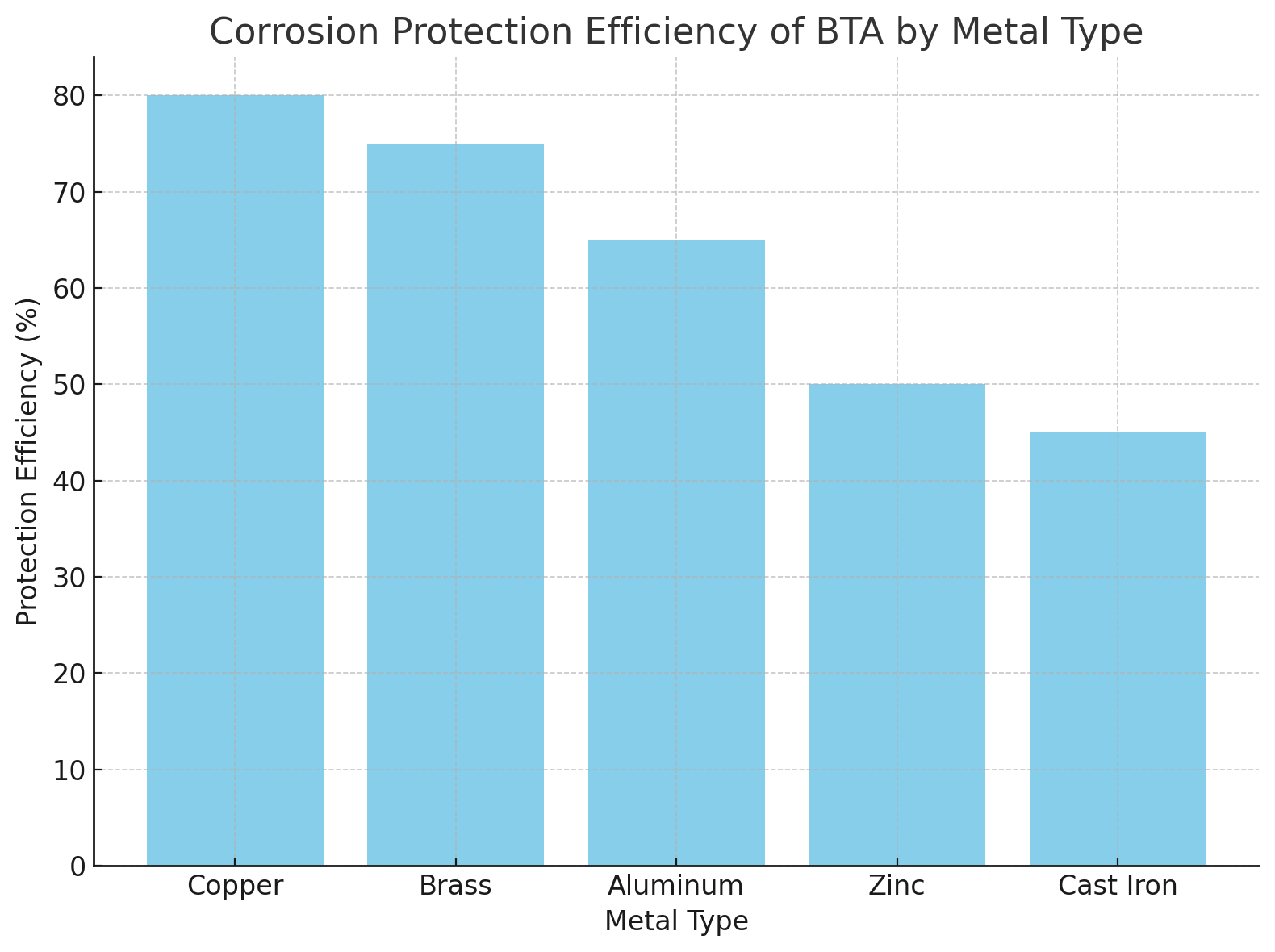
BTA plays a significant role in preventing corrosion, especially in copper and its alloys. Copper is widely used in heat exchangers, cooling systems, and other water treatment applications due to its excellent thermal conductivity. However, copper is susceptible to corrosion, particularly when exposed to oxygen, water, and other corrosive agents. When BTA is introduced into the system, it forms a thin, protective passivation layer on the metal surface. This layer prevents direct contact between the metal and corrosive elements, effectively shielding the metal from oxidation and prolonging its lifespan.
While BTA is most commonly associated with copper corrosion prevention, it also works effectively on other metals like zinc, aluminum, cast iron, and even some ferrous metals. BTA can form protective layers on a variety of metal surfaces, preventing rust and corrosion in environments where water treatment chemicals are needed. When combined with other corrosion inhibitors, BTA can enhance the protection of multiple metal systems in industrial settings.
One of the key advantages of BTA is its ability to resist corrosion caused by chlorine and other oxidizing agents commonly used in water treatment. Chlorine, often used in disinfectants, can accelerate the corrosion of metal surfaces, especially copper. BTA remains stable in the presence of chlorine, maintaining its corrosion-inhibiting properties even in chlorinated water systems. This makes it especially valuable in cooling towers, swimming pools, and municipal water treatment plants where chlorine is used for disinfection.
BTA is also known for its stability in high-temperature environments, making it ideal for use in systems like boilers and cooling towers where elevated temperatures prevail. At higher temperatures, many corrosion inhibitors lose their effectiveness, but BTA maintains its ability to protect metal surfaces, preventing damage caused by extreme conditions. This high-temperature stability allows industries to continue operating their water systems with minimal interruption, reducing downtime and maintenance costs.
BTA is highly compatible with other water treatment chemicals, such as scale inhibitors, biocides, and pH stabilizers. In mixed-metal systems, BTA can be used alongside other corrosion inhibitors to provide comprehensive protection for a wide range of metals. Its synergy with these chemicals allows for more efficient water treatment processes, ensuring the longevity of both the equipment and the water system itself.
BTA is known for its relatively low toxicity, making it safe for use in water treatment systems. It does not pose significant environmental risks when used correctly, and its biodegradability ensures that it breaks down naturally without causing harm to aquatic life. Proper handling and storage are important to ensure that BTA maintains its effectiveness and does not pose any risk to users or the environment. As with all chemicals, appropriate safety measures, such as personal protective equipment (PPE), should be taken when handling BTA.
Cooling water systems, such as those in power plants and HVAC systems, often rely on copper-based components like heat exchangers. BTA is essential for protecting these components from corrosion, extending their lifespan, and maintaining optimal heat transfer efficiency. By preventing corrosion in heat exchangers, BTA helps reduce the likelihood of system failures, which can be costly and disruptive to operations.
BTA is also used in boiler systems to protect copper-based components from corrosion. Boilers operate under high-pressure and high-temperature conditions, making them susceptible to rapid deterioration without proper corrosion control. By incorporating BTA into the water treatment process, boiler systems can operate more efficiently, with reduced maintenance and repair costs.
In closed-loop water systems, which are commonly used in industrial applications like heating and cooling systems, BTA helps prevent corrosion of metal components. These systems are designed to circulate water without discharging it, meaning that any corrosion within the system could cause significant damage to pipes, pumps, and other equipment. BTA forms a protective barrier on metal surfaces, preventing corrosion and ensuring the system remains efficient and operational for longer periods.
Beyond cooling towers and boilers, BTA is used in a variety of other industrial applications where metal corrosion is a concern. It can be found in automotive cooling systems, industrial lubricants, and even in the preservation of silver and other precious metals. Its versatility and effectiveness make it a valuable tool for industries across the board, from manufacturing to oil and gas.
BTA’s relatively low toxicity makes it a safer choice for water treatment compared to some other corrosion inhibitors. It poses minimal risks to aquatic life and the environment when used in accordance with safety guidelines. This makes it an environmentally friendly option for industries that must adhere to environmental regulations and sustainability practices.
BTA is biodegradable under certain conditions, which means that it breaks down naturally in the environment over time. This reduces its long-term environmental impact, making it a more sustainable choice for water treatment processes compared to other chemicals that may persist in the environment.
While BTA is relatively safe, it should still be handled with care. Personal protective equipment (PPE) such as gloves, safety glasses, and respiratory protection should be used when handling BTA to prevent any potential health risks. Additionally, BTA should be stored in a cool, dry place, away from heat sources, to maintain its stability and effectiveness.
The dosage of BTA required for effective corrosion protection varies depending on the specific system and water conditions. Typically, BTA is used at concentrations ranging from 1 to 10 mg/L, depending on the level of protection needed. Higher concentrations may be used in more corrosive environments or where additional protection is required.
BTA is commonly introduced into water treatment systems through the use of dosing pumps, which ensure that the chemical is evenly distributed throughout the system. Proper mixing is essential to ensure that BTA can form a protective layer on all metal surfaces, providing consistent corrosion protection.
BTA is a powerful corrosion inhibitor, especially for copper and its alloys, used in various water treatment applications. It provides long-lasting protection, reduces maintenance costs, and extends equipment life. BTA’s compatibility with other water treatment chemicals makes it a versatile solution for industries worldwide.
To maximize its effectiveness, proper dosage and handling are crucial. For reliable corrosion protection and expert guidance, JIANGYIN TRUST INTERNATIONAL INC offers high-quality BTA products tailored to your water treatment needs.
A: Benzotriazole (BTA) is a corrosion inhibitor used in water treatment to protect metals like copper and its alloys from corrosion. It forms a protective layer, extending the life of water treatment systems.
A: BTA works by forming a passivation layer on metal surfaces, preventing corrosion. It’s commonly used in cooling systems and closed-loop water systems as part of a broader water treatment chemicals strategy.
A: BTA is crucial for preventing corrosion in water systems, especially in systems with copper-based components. Its use in water treatment chemicals ensures efficiency, reduces maintenance costs, and extends equipment lifespan.
A: Yes, BTA is compatible with other water treatment chemicals, such as scale inhibitors and biocides. This synergy helps enhance overall system protection, preventing corrosion and scaling in industrial systems.
A: BTA provides long-lasting corrosion protection, reduces maintenance, and increases the efficiency of water systems, especially in harsh conditions like high temperatures and exposure to chlorine.