
Views: 0 Author: Site Editor Publish Time: 2025-12-10 Origin: Site


Every plant manager knows cooling towers and water networks face constant biological warfare. Unchecked microbial growth isn't just a nuisance – it's a profit killer. Here's what's happening inside your pipes:
When bacteria like Pseudomonas aeruginosa colonize cooling systems, they form stubborn biofilms that act like insulation on heat exchangers. One automotive manufacturer measured 17% energy loss from fouled exchangers in just 3 months. Worse yet, microbial-induced corrosion caused $240,000 in unscheduled maintenance when heat transfer plates failed prematurely.
Nutrient-rich water invites algal blooms that clog filtration systems. A Texas power plant reported cleaning intake screens twice daily during summer peaks until they addressed the root cause. Meanwhile, slime deposits accelerate scale formation, reducing flow rates by up to 40% in closed-loop systems according to ASHRAE field data.
2,2-Dibromo-3-nitrilopropionamide (DBNPA) isn't just another biocide. Its molecular structure (C3H2Br2N2O) packs a dual-action punch:
Bromine compounds penetrate cell walls within minutes
Nitrilo groups disrupt enzyme functions irreversibly
With a flash point of 87.8°C and stability below pH 7, it survives harsh industrial conditions where alternatives fail.
Picture this scenario: E. coli starts multiplying in your cooling tower after a rainstorm. Traditional biocides might take hours to respond. DBNPA? It neutralizes threats before shift change. By attacking cell membranes and halting metabolic processes simultaneously, it achieves 99.9% microbial knockdown in under 30 minutes at just 15 ppm concentrations.
Prevention beats cure every time. DBNPA eliminates planktonic bacteria during their vulnerable free-floating stage. A Midwestern chemical plant avoided 23% production loss by switching from weekly shock treatments to targeted DBNPA dosing that prevents biofilm "foundation layers" altogether.
When Chlorella blooms choked a Florida refinery's intake pipes, DBNPA solved it without mechanical cleaning. How? It sabotages chlorophyll production like cutting power to a factory. Algae cells rupture within 90 minutes post-application, restoring flow rates without costly downtime.
Biofilm matrices resemble industrial glue – until DBNPA attacks their polysaccharide binders. Maintenance crews at a German paper mill report slime layers now flush away with 70% less pressure washing. That's weeks of labor saved annually and zero abrasive damage to sensitive equipment.
During an unexpected Legionella scare, an Ohio plant used DBNPA shock treatment to avoid mandatory shutdowns. Water tests showed safe levels within 28 minutes – faster than assembling their crisis team. That speed prevents:
FDA-mandated production halts ($50k+/hour fines)
Emergency overtime for cleanup crews
Brand reputation damage from contaminated output
Compare DBNPA's 5-20 ppm effective range to alternatives requiring 50-100 ppm. A Louisiana petrochemical facility documented $18,000/month chemical savings after switching. Their secret? Precise dosing controls that cut waste while maintaining ISO 15848 leak-tight standards.
Unlike quaternary ammonium compounds, DBNPA decomposes into biodegradable cyanacetamide. This breakdown pathway satisfies both EPA discharge limits and REACH documentation requirements. One European utility company avoided €200,000 in filtration upgrades because DBNPA met wastewater thresholds without extra treatment.
Your dosing strategy depends on three factors:
System volume (continuous feed > 500m3)
Contamination severity (shock doses for visible slime)
Water chemistry (pH must stay ≤7)
Pro tip: Install redox potential monitors – they're your early-warning system against microbial surges.
DBNPA demands respect. Corrosive exposure risks require:
Chemical-resistant gloves (Butyl rubber > Nitrile)
Negative-pressure storage cabinets
Strict isolation from reducing agents like sulfides
A single incident where hydrogen sulfide contacted DBNPA cost a plant $12,000 in degraded inventory. Proper handling preserves both safety and your investment.
Demand certificates of analysis showing:
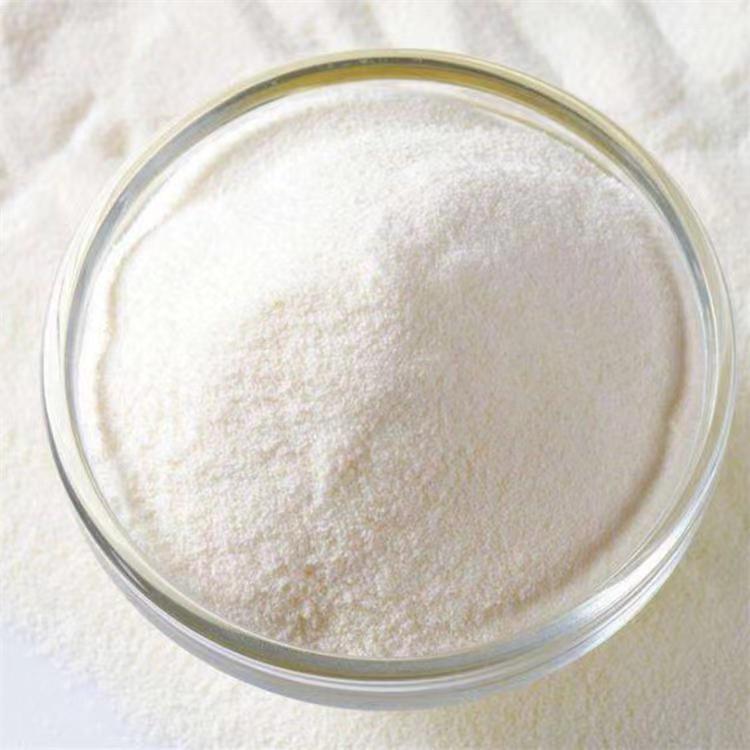
≥99% purity (white crystalline powder)
Melting point 122-125°C confirmation
Third-party verification of rapid water solubility
Verify thermal stability – suppliers should provide DSC curves proving no decomposition below 80°C.
DBNPA amplifies existing treatments:
| Combination | Benefit | Cost Impact |
|---|---|---|
| + Chlorine | Penetrates biofilms chlorine can’t reach | Reduces chlorine use by 30% |
| + Dispersants | Prevents detached biofilm reattachment | Cuts flush cycles by half |
Always trial new combinations in side-stream test loops first.
Dubai's extreme heat tests any water treatment. A desalination plant using DBNPA documented:
Biofilm levels below 500 CFU/cm2 (ISO 16266)
Heat transfer coefficients maintained at 98% design capacity
Zero Legionella detections during health inspections
Their maintenance supervisor credits scheduled DBNPA pulses for preventing surprise outages during peak demand.
Procurement teams appreciate DBNPA's complete regulatory dossier:
REACH Annex XIV exemption (No SVHC concerns)
EPA FIFRA Subsection 3 registration
OCNS GBR approval for coastal discharges
Keep SDS documents updated – inspectors now check revision dates.
Red flags in supplier assessments:
No batch-specific COAs
Ambiguous decomposition temperature claims
Storage facilities without climate control
Demand supply chain maps – one buyer discovered their "US-made" DBNPA was actually repackaged overseas, violating sourcing policies.
Use this formula to justify the switch:
Savings = (Current biocide cost/kg × Monthly usage) - (DBNPA cost/kg × 0.4 × Monthly usage)
The 0.4 multiplier reflects typical dosage reductions. Most plants recover implementation costs in under 5 months through reduced chemical volumes and maintenance labor.