


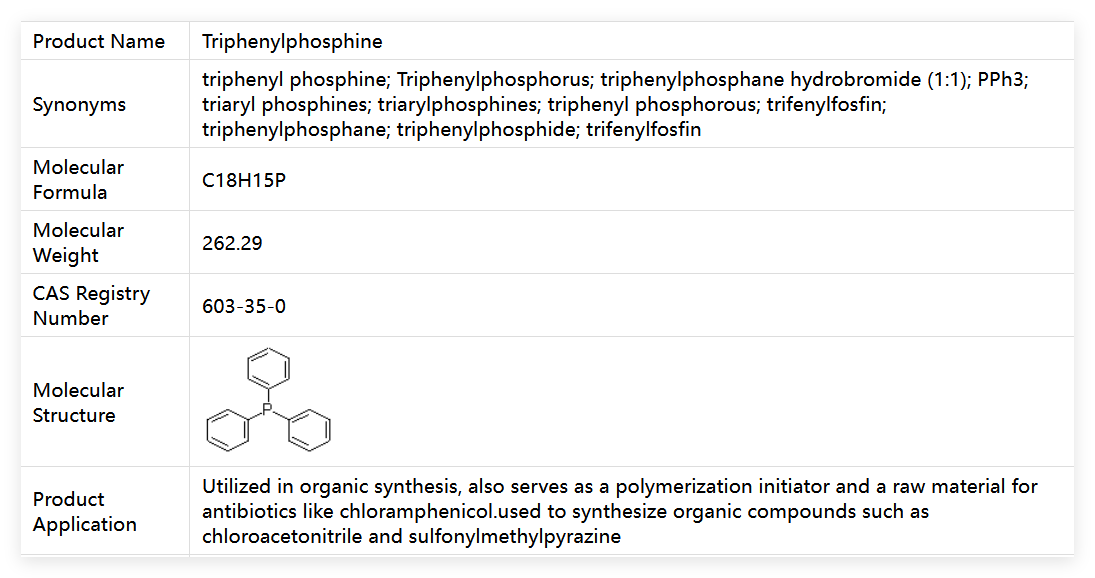
When pharmaceutical manufacturers in Frankfurt needed to streamline clindamycin production last quarter, their solution came in crystalline form: Triphenylphosphine. This organophosphorus workhorse (C₁₈H₁₅P, MW 262.285) consistently proves indispensable across chemical synthesis. Unlike experimental reagents, TPP delivers predictable outcomes that plant managers can bank on - whether preventing PVC discoloration on extrusion lines or achieving 90%+ coupling yields in Suzuki reactions. For procurement specialists balancing reactivity requirements with storage logistics, its 79-81°C melting point and stable shelf life translate directly into reduced warehouse costs and minimized production stoppages.
Handling efficiency starts with TPP's physical profile. The white crystalline powder remains stable at typical facility temperatures, with low volatility that prevents workspace contamination (vapor pressure: 0.0±0.8 mmHg at 25°C). You'll notice immediate workflow advantages from its solubility profile: insoluble in water but readily dissolves in benzene/ether systems. This characteristic allows separation teams to recover products faster - a German API manufacturer cut purification time by 23% after switching suppliers. Crucially, maintaining integrity requires only basic precautions: sealed containers in ventilated areas, avoiding strong oxidizers that could trigger decomposition.
As a Class 6.1 toxic substance (UN 3077), TPP shipments demand specific safeguards. Reputable suppliers use polyethylene bottles inside foam-cushioned cartons clearly marked with:
GHS07/GHS08 hazard pictograms
"Toxic - Keep from ignition sources" warnings
Full manufacturer contact details
During Spain's heatwave last summer, a batch arrived uncompromised because the carrier adhered to critical protocols: segregated transport from oxidizers, GPS-monitored vehicles with spill kits, and sunshield deployment. Conversely, a facility in Lyon faced €15k in cleanup costs when untrained staff handled a ruptured package without N95 masks and chemical gloves.
Beyond its role constructing antibiotic backbones like clindamycin, TPP serves as the gold standard for phosphorus quantification. QC managers rely on its consistency to calibrate analyzers - ensuring every batch meets USP purity specs. When a Budapest lab upgraded their instrumentation, using CAS 603-35-0 as reference material eliminated calibration drift issues that previously caused 8% batch rejections.
Consider PVC extrusion runs costing €12k/hour: TPP's oxidation resistance prevents yellowing at processing temperatures. Its 181.7°C flash point provides critical safety margin while functioning as:
Synthetic rubber stabilizer - extends warehouse storage by 6 months
Alkyd resin modifier - boosts coating weather resistance by 40%
Polyester reinforcement agent - improves tensile strength in automotive composites
Savvy procurement teams evaluate TPP beyond per-kilo pricing. A Dutch agrochemical producer found that despite 5% higher upfront cost, Grade-A TPP delivered:
15% higher conversion in trimethyl phosphite synthesis
Reduced catalyst reloading frequency
Zero non-conformance reports from REACH auditors
Since EPA reclassified organophosphorus compounds last year, insist on suppliers providing:
Full SDS with Section 15 regulatory info
Third-party purity certifications (ISO 17025)
Batch-specific CoAs confirming <0.5% oxide content
A UK plant avoided 30-day shutdown by rejecting a "discount" shipment lacking REACH statements - the substitute material failed impurity screening.
Ultimately, TPP's value emerges in daily operations. Maintenance supervisors report fewer reactor cleanings thanks to its clean reduction pathway (forming insoluble Ph₃PO byproduct). Production planners appreciate not needing nitrogen blankets for storage - just cool, dry conditions. And for those managing hazardous material inventories, its GHS "Warning" classification simplifies protocols versus "Danger"-labeled alternatives. When evaluating suppliers, prioritize those offering technical support: one Italian manufacturer's catalyst consumption dropped 18% after implementing the vendor's reaction stoichiometry guidance. In chemical manufacturing, predictable performance isn't just convenient - it's profit protection.